








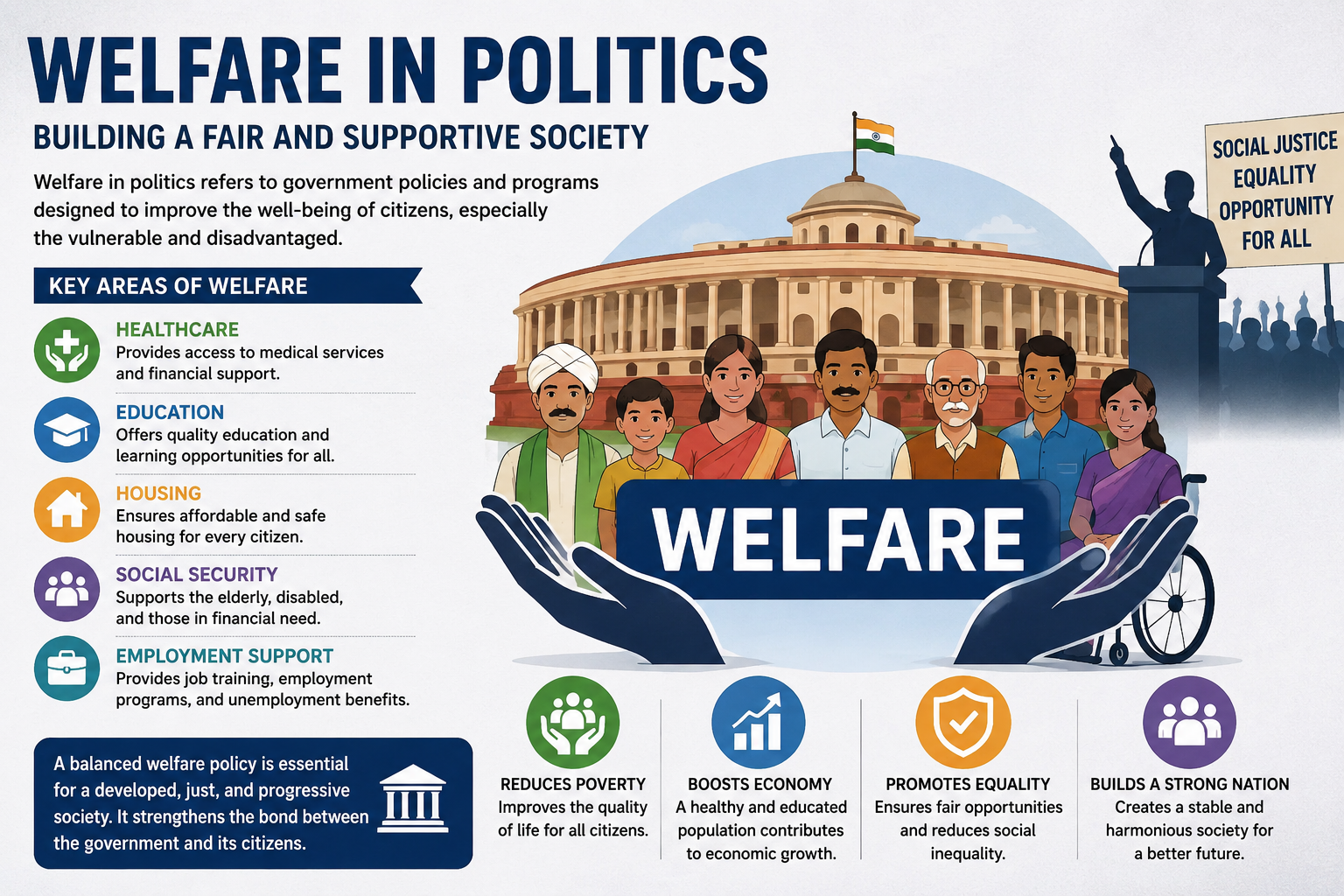
Welfare in Politics: Balancing Social Support and Economic Development
Welfare is one of the most important aspects of modern politics. It refers to government programs and policies designed to support the well-being of citizens, particularly those who are disadvantaged, unemployed, elderly, disabled, or facing financial hardship. Political leaders and parties often debate the scope, funding, and effectiveness of welfare programs because they have a direct impact on society and the economy.
The primary goal of welfare policies is to reduce poverty and promote social equality. Governments may provide financial assistance, healthcare services, education subsidies, housing support, and unemployment benefits to help citizens maintain a basic standard of living. These programs can improve quality of life, reduce social inequality, and create opportunities for individuals to contribute positively to society.
In politics, welfare often becomes a key issue during elections. Some political parties advocate for expanded welfare programs, arguing that governments have a responsibility to protect vulnerable groups and ensure equal opportunities for all citizens. Others support limited welfare spending, believing that excessive government assistance may increase public expenditure, discourage self-reliance, and place a burden on taxpayers.
A well-designed welfare system can contribute to social stability and economic growth. When citizens have access to healthcare, education, and basic financial support, they are better equipped to participate in the workforce and contribute to national development. However, policymakers must carefully manage welfare programs to ensure they are sustainable and effectively targeted toward those who need them most.
In conclusion, welfare plays a crucial role in politics by shaping the relationship between governments and citizens. While opinions may differ regarding the extent of welfare support, most agree that a balanced approach is necessary to promote social justice, economic stability, and national progress.